
Christian Almanac: Where Faith Meets Real Life
Episode 5 Transcript
Faith-Centered Decisions: When you don’t have all the answers
Click on the  in each section below to read the podcast segments
It seems like life is just one decision after another.
They range from mundane and inconsequential to complex and critical. While it’s true that even those day-to-day choices—what to have for dinner, what to wear, which movie to watch—can get tiresome, what I want to focus on in this episode is making those difficult decisions, the decisions that have significant consequences for you and others, that are time-sensitive, that might have to be made without having all the information you’d like to.
These are the decisions that don’t wait politely for clarity. They crash in with deadlines, expectations, and often a sense of urgency that makes it tempting to rush—or to avoid deciding at all.
Of course our faith comes into play with any decision, but most of us don’t need to ask God for help choosing between chocolate and vanilla. Although I do frequently thank God for creating chocolate, but we’ll save gratitude for another show.
For those hard decisions, those choices that can tie our stomachs up in knots,
we need to make sure God is involved. Not as a last resort, not as a rubber stamp after we’ve already decided what we want to do—but as an active presence throughout the process.
When the decision is important, we’re going to experience decision stress. This pressure is understandable.
We’re afraid we might get it wrong.
We might have to take responsibility for outcomes that are beyond our control.
We might be struggling with competing priorities and values.
Feeling tension when we’re facing a decision doesn’t mean we lack faith or ability, it means the decision MATTERS.
The Bible reminds us that wisdom often comes through careful consideration, not impulsive action. Proverbs 21:5 says
Good planning and hard work lead to prosperity, but hasty shortcuts lead to poverty. (Proverbs 21:5, NLT)
Feeling the weight of a decision can actually be a sign that you’re taking it seriously, and that’s a good thing.
So how do we lead with faith when it comes to making important decisions?
The first thing is to recognize that faith does not always remove uncertainty
or guarantee a perfect outcome.
Certainly we need to let God be in charge, but turning something over to God doesn’t mean we wash our hands of it. Faith is not a way to escape responsibility, and it’s not a promise that everything will work out exactly the way we want it to—or think we want it to at the time.
What faith CAN do is help us anchor our decisions in the values we live by. We become less driven by potential outcomes and more driven by value-alignment. We focus on doing the right thing because it’s the right thing. We take the time to ask good questions that will yield essential information, even if it takes more time.
Faith can reduce stress and panic. When we have involved God in every step of a decision, we’ll be at peace no matter what happens. That peace doesn’t come from certainty—it comes from trust.
And faith can encourage wisdom, patience and perspective.
James puts it very plainly: “If you need wisdom, ask our generous God, and he will give it to you. He will not rebuke you for asking.” (James 1:5, NLT). Wisdom is something God wants to provide, not something we’re expected to manufacture on our own.
Faith encourages patience by reminding us that not everything has to be resolved immediately. Waiting is not the same as doing nothing; it is often active trust.
When we believe that God is at work beyond what we can see, we’re less likely to force a decision just to relieve discomfort. In this sense, patience isn’t passive, it’s confidence that God’s timing is more important than our urgency.
Faith also gives us perspective. It helps us zoom out from the urgency of the moment to the broader picture of our lives and calling. Instead of asking, “How do I solve this?” or “How do I make this go away?” we begin to ask, “What does faithfulness look like here?”
Perspective lets us hold decisions in their proper place. They matter, but they’re not the only moments that define us. Faith-driven perspective reminds us that one decision is not the full weight of our identity or our future.
Here’s a framework you can use to make faith-aligned decisions in every aspect of your life. Understand that this isn’t a formula for absolute certainty, it’s a way to bring clarity and peace into the decision-making process. It won’t mean that your decisions will always be perfect or that you’ll always see the results you wanted. It WILL mean that you’ll make decisions that are aligned with God’s plan and purpose for you.
The first thing to do is, of course, to pray. Ask God to guide you as you work through the decision-making process. There are times when God just hands us the answer. And then there are times when God says, “Okay, I’m glad you came to me. I’m going to walk you through this.”
Both of these God responses require us to respond in humility—the humility to receive an answer, and the humility to stay engaged when the answer unfolds over time.
Either way, your next step is to clarify what matters most. Before you start thinking about WHAT to do, figure out why it matters. Take the time to answer these three questions.
One. What values are at stake in the situation?
Two. Who will be affected? And
Three. What matters beyond convenience and speed? That you would want a result that is as simple and fast as possible is a given. What else matters?
Taking the time to ask and answer these questions slows us down just enough to move us out of reaction mode and into discernment so we can make a thoughtful, God-guided decision.
When you’ve thought through these questions, come up with some options that might work. Sometimes you’re starting from zero. Sometimes the decision arrives with choices built in, and you can either work with those or add to them.
Don’t assume the first option you see is the only faithful one. Wisdom often requires creativity, and sometimes God gives you what you need in stages.
Now look at the long-term impact of your options.
For each one, consider how it will shape character—yours as well as the character of others.
What kind of habits will it reinforce?
Does it align with your long-term goals and calling? If it’s a business decision, does it align with the purpose and mission of the organization?
This is where faith helps us lift our focus from immediate relief to lasting impact.
You’re not trying to predict the future here. No matter how much information we have—or don’t have—we can’t know for sure what will happen. What we want to do is check our foundation and choose thoughtfully with what’s truly important in mind.
Remember, “Trust in the Lord with all your heart and lean not on your own understanding; in all your ways submit to him, and he will make your paths straight” (Proverbs 3:5–6, NIV).
When you’ve asked and answered those three questions, you’re ready to make the best decision you can with what you know and let God take control of what happens. That final step—letting go—is often the hardest. But it’s also where faith moves from theory into real life.
I’ll be back in a moment.

What if your faith shaped your decisions—not just on Sundays, but every day at work?
Christian Business Almanac is a page-a-day guide designed for values-driven entrepreneurs, leaders, and professionals who want their faith to show up where it matters most.
Each day delivers Scripture, practical insight, and thoughtful reflection—helping you integrate biblical truth into leadership, work, and life.
This isn’t theory. It’s faith applied, one day at a time.
Learn more and find purchase links at ChristianAlmanac.com.
That’s ChristianAlmanac.com.
Welcome back.
We all have blah days.
Even the most positive, optimistic person has a down day once in a while—a day when nothing is actually wrong, but things just aren’t quite right. Your energy is off, your motivation is low, and it feels like a struggle just to get through the things you know you need to do.
The problem with those blah days is that they can quietly snowball. When you slip into a downward spiral, it can be hard to pull yourself back up. Those days can also drain your focus and creativity, making even simple tasks feel heavier and harder than they need to be.
And moods are contagious—when you’re feeling down, you can unintentionally spread that heaviness to the people around you.
What I’m going to share isn’t exactly groundbreaking. It’s more like the kind of wisdom we need to be reminded of—especially when it feels like the enemy is trying to wear us down through discouragement.
So what can you do to bounce back from the blahs?
Here are seven simple things you can try.
One. Reject your routine.
Routines are usually good things, but sometimes they keep us stuck on autopilot. A small interruption can reset your mood and your mindset. Do something different on purpose. Turn off the TV and play a game or read a book. Listen to music instead of a podcast—or a podcast instead of music. Take a different route to work or school. If you’re in the grocery store, reverse the order you go through the aisles—you might find some interesting things you didn’t know the store carried. The point isn’t productivity; it’s disruption. Even small changes can wake your brain up and shift your emotional state.
Two. Change your input.
Pay attention to what you’re taking in. What you listen to, watch, scroll, and dwell on quietly shapes your mood and your thinking. If your input is heavy, negative, or mindless, it can deepen that low-grade fog without you realizing it.
So make a deliberate switch. Put on worship music instead of background noise. Listen to something encouraging or thoughtful instead of the news or social media. Read a Psalm or a short passage of Scripture slowly, not to study it, but to let it settle your heart.
When you choose better input, you let truth, beauty, and hope do some quiet repair work on your mood and attitude.
Three. Create something to look forward to.
If you’re feeling blah in the morning, intentionally plan something enjoyable for later in the day—and let yourself anticipate it. Maybe it’s a favorite takeout meal, a new recipe, a phone call with someone who makes you laugh, or curling up with a book or show you’ve been saving. It could be as simple as an evening walk at sunset or treating yourself to a special coffee on the way home. If the blahs hit later in the day, plan something for tomorrow. Anticipation itself can be joyful and energizing.
Four. Go outside.
We aren’t made to be locked inside buildings all day. Even if it’s just for a few minutes, spend time in nature—trees, water, sky, fresh air—whatever is available where you live or work. Go for a walk, stretch, or just sit and notice what’s around you. I work from home, and one of the things that always brightens my mood is to step away from my computer and take the dog outside—whether she needs to go or not. Scripture reminds us, “The heavens declare the glory of God, and the sky above proclaims his handiwork” (Psalm 19:1, ESV). Sometimes lifting our eyes—literally—helps lift our spirits.
Five. Practice gratitude.
We hear this one a lot, and for good reason. There are so many benefits to being grateful. That’s why a significant number of the daily prayer prompts in Christian Business Almanac are gratitude prompts. I know—from been there, done that experience—that making a list of things you’re grateful for won’t always pull you out of a bad mood, but it can shift your perspective and help lift your spirits at least a little.
As Scripture says, “Give thanks in all circumstances; for this is the will of God in Christ Jesus for you” (1 Thessalonians 5:18, NIV). Gratitude doesn’t deny that the day feels off—it just reminds us that the off day isn’t the whole story.
Six. Do something nice for someone.
It doesn’t have to be big. Pay a sincere compliment—maybe to someone you know or even a total stranger. Hold the door or offer to help carry a package. Send an encouraging text. Let someone merge in traffic. Scripture tells us, “Encourage one another and build each other up” (1 Thessalonians 5:11, CSB). When you lift someone else’s spirits, your own often rise with them. It really is a rising tide that lifts all boats.
And Seven. Connect with people.
Technology makes isolation easy, but we’re created for community. Reach out to a friend or family member, even if it’s just for a quick coffee or a short phone call. And yes—this is where “fake it till you make it” can be okay. If you have to start by acting interested or engaged, do it. Connection has a way of turning effort into genuine energy.
And finally, I don’t think it’s especially important to figure out WHY you’re feeling down unless it’s something persistent or chronic. For those occasional blah days, don’t overanalyze. Focus instead on what helps you shake it off, restore your energy, and choose hope.
Sometimes the most faithful response is simply to say, not today, to whatever is trying to drag you down—and then take one small step in a better direction and trust God with the rest.
And by the way, these tips are good ideas to do ANY day, not just the days you feel blah. Interrupt your routine, change your input, create something you can look forward to, get outside, practice gratitude, do something nice for someone, and connect with people.
Try it. Let me know how it goes.
I’ll be back in a moment with today’s real life tip.
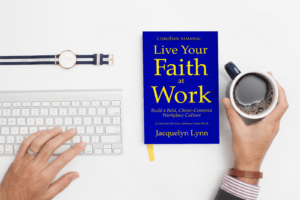
What would change if your faith shaped how you lead, decide, and treat people at work?
Live Your Faith at Work is a concise, practical guide for business owners, leaders, and professionals who don’t want their faith compartmentalized.
This Christian Business Almanac Focus book delivers clear, easy-to-apply direction for building a Christ-centered workplace culture—through leadership habits, communication, integrity, and care for people.
It’s not inspiration. It’s application.
Learn more and find purchase links at ChristianAlmanac.com.
That’s ChristianAlmanac.com.
Our Real Life Tip for today has to do with online research and AI.
If you use Google—and yes, I still do—you’ve noticed that it has added an AI answer to the top of its search results.
Depending on what you’re searching for, this can be convenient. But there are times when I have a question and I’d rather go to a specific source or sources than to sort through Google’s summary of the information, which may or may not be accurate. Of course, you can just scroll past the AI answer, but you can also get rid of it.
I got this tip from my friend Elise Cronin-Hurley, who does web and graphic design. To eliminate Google’s AI overview from your search results, type minus AI in your search query. Ask your question and then add a minus sign with AI, no spaces, before you hit search.
That will give you a list of websites with the information and/or products you’re seeking. Your search results will look like the old Google search pages. You might still see sponsored listings, but you can determine for yourself if the sources are reliable.
I’ve found Google’s AI overview to be generally accurate, but it DOES make mistakes. I’ve even seen it give the wrong citation for Scripture.
So if you’re looking for something quick and general, like recipes or quick household tips, and if absolute accuracy and knowing who the sources are isn’t important to you, use Google’s AI overview.
If you need to go deeper and you want to know your sources and make your own decisions about their value and trustworthiness, add minus AI to your Google search queries.
Thanks for being here. See you next week.