
Christian Almanac: Where Faith Meets Real Life
Episode 40 Transcript
Transcript: When Comparison and Desire Cloud Your Judgment
Click on the  in each section below to read the podcast segments
Our judgment isn’t always changed by new facts. Sometimes it’s changed by learning what someone else received—or by wanting a particular outcome so badly that we begin interpreting the evidence differently.
In Episode 40 of Christian Almanac, Jacquelyn Lynn explores both problems. First, she considers the relationship between comparison, generosity, and gratitude through Jesus’ parable of the vineyard workers. Then she examines why attractive offers can become especially difficult to evaluate objectively, and how biblical prudence can help us make wiser decisions.
Below is the transcript of When Comparison and Desire Cloud Your Judgment.
Have you ever been perfectly satisfied with what you received—until you found out somebody else got more?
Suppose you’re negotiating a consulting contract. You ask for $5,000. The client agrees. You believe the work is worth $5,000, you’re pleased with the arrangement, and everybody signs.
Then later, you discover another consultant received $7,500 for similar work.
Nothing about your agreement changed.
You’re still doing the same work. You’re still receiving the $5,000 you asked for. Nothing was taken away from you.
But suddenly, you’re irritated.
And that’s the moment to ask:
Did I actually get a bad deal—or did somebody else’s good fortune change the way I see mine?
We do this in all kinds of situations.
You buy a new refrigerator for $1,200. You researched it, you thought the price was fair, you bought it, and you were perfectly happy.
Then two days later, a friend tells you she bought the identical refrigerator for $999 during a special promotion.
Suddenly your perfectly satisfactory purchase doesn’t seem so satisfactory.
Maybe someone gets a better hotel rate than you did. Your neighbor negotiates a lower price on the same car. Or another customer gets a promotional discount you weren’t offered.
And you start thinking: Wait a minute. Why didn’t I get that?
But here’s what’s interesting.
Nothing about your transaction changed.
You still received exactly what you were happy with before you heard somebody else’s number.
What changed was the comparison.
I was happy with what I received. Then I saw what you received. Now mine doesn’t seem good enough.
And that’s comparison at work.
But let’s turn it around.
What happens when you discover that somebody else got less than you did—or paid more for something?
Suppose you paid $1,200 for that refrigerator and then learned your friend paid $1,500 for the exact same one.
Do you suddenly feel a little better about your purchase?
Maybe even a little proud of yourself?
Maybe—if we’re being candid—a little gleeful?
“Well, I got a better deal than she did.”
That’s worth noticing too.
Because if somebody else’s better deal makes ours feel worse, and somebody else’s worse deal makes ours feel better, then maybe we’re not evaluating what we received on its own merits.
We’re measuring it against somebody else.
And Jesus told a parable that gets right to the heart of this.
In Matthew 20, Jesus tells the story of a landowner who went out to hire workers for his vineyard.
Some were hired early in the morning. Others came later in the day. And some didn’t start working until near the end of the day.
When it was time to pay them, the landowner gave the workers who came last a full day’s wage.
So naturally, the workers who had been there all day assumed they would receive more.
But they didn’t.
They received exactly what they had agreed to.
And that’s when they complained.
Think about that.
Their wage had not been reduced.
The landowner had not broken his promise.
They had agreed to the amount. They worked for the amount. They received the amount.
Their dissatisfaction began when they saw what somebody else received.
And the landowner says to one of them:
“Don’t I have the right to do what I want with my own money? Or are you envious because I am generous?” — Matthew 20:15, NIV.
That last question is uncomfortable.
Are you envious because I am generous?
Because sometimes that’s what we’re really dealing with.
Not injustice.
Generosity.
Generosity directed toward somebody else.
Now, I want to be very clear about something.
There is real unfairness in the world.
People are sometimes discriminated against, exploited, deceived, or treated differently for reasons that are wrong.
Those things should not be dismissed by saying, “Well, you agreed to it.”
And this parable is not permission for leaders to create arbitrary or discriminatory compensation systems and then tell employees they should simply be grateful.
Leadership carries responsibilities involving fairness, transparency, stewardship, and trust.
That’s not what I’m talking about here.
I’m talking about those situations where you really were satisfied with what you received—until you learned somebody else received more.
And that’s where this becomes more than a lesson about getting a good deal.
Because Christianity rests on something we could never earn.
Grace.
We don’t come to God asking him to give us exactly what our performance deserves.
At least, I hope we don’t.
We depend on his mercy, his forgiveness, and a generosity we could never earn.
Grace isn’t God giving us precisely what our performance deserves.
And we’re wonderfully comfortable with that when we’re the ones receiving it.
We’re grateful when God gives us another chance, opens a door we didn’t expect, or forgives us when we know we haven’t earned it.
But then we look over and see God being generous to someone else.
Maybe they get the opportunity we wanted. Maybe they receive a second chance we don’t think they earned. Or maybe something finally goes right for them—and instead of rejoicing with them, something in us says:
Wait a minute.
What about me?
That’s why I think the question in Matthew 20 is so powerful.
Are you envious because I am generous?
How often do we thank God for his generosity to us—right up until we see him being even more generous to someone else?
And that’s why this matters beyond money or getting the best deal. Comparison can make generosity look like unfairness. It can make someone else’s gain feel as though it somehow came at our expense.
Someone else’s blessing doesn’t reduce yours.
Their opportunity doesn’t take anything away from what God has already given you.
Their good deal doesn’t retroactively turn yours into a bad one.
Now, there may still be something to learn.
If you discover somebody negotiated a much better price on the same car you just bought, ask how they did it.
Maybe they knew something you didn’t or simply negotiated differently. You might learn something that helps you next time.
That’s wisdom.
There’s nothing wrong with learning something practical from somebody else’s better deal.
But learning is different from resentment.
“What can I learn from this?” is a very different response from, “I was cheated because you did better.”
And the same is true in the other direction.
If somebody else paid more than you did, you don’t have to take pleasure in the fact that they did worse.
You can simply be grateful for what you received.
Maybe that’s part of the spiritual discipline here.
Receiving God’s generosity without constantly measuring it against what somebody else received.
Because comparison can do something strange to gratitude.
It can take something we appreciated five minutes ago and make it feel inadequate.
Not because it changed.
Because we looked sideways.
So maybe one useful question when that feeling hits is:
Would I still be dissatisfied if I didn’t know what they received?
And there’s another one:
Would I feel quite so pleased with my deal if I didn’t know somebody else did worse?
Those questions can reveal a lot.
Sometimes what feels like unfairness really is unfairness, and it needs to be addressed.
But sometimes what feels like unfairness isn’t injustice.
It’s comparison.
And comparison can make somebody else’s generosity feel like something was taken away from us—even when nothing was.
We were happy with what we received. Then we saw what somebody else received. And suddenly ours didn’t seem like enough.
God’s generosity toward someone else doesn’t diminish his generosity toward us.
And maybe that’s one of the harder lessons of grace.
Being grateful for what God gives us is one thing.
Being able to rejoice when he is generous to somebody else is something deeper.
When we come back, we’ll look at another way our judgment can get distorted—what happens when we want something to be true so badly that we stop asking whether it really is.
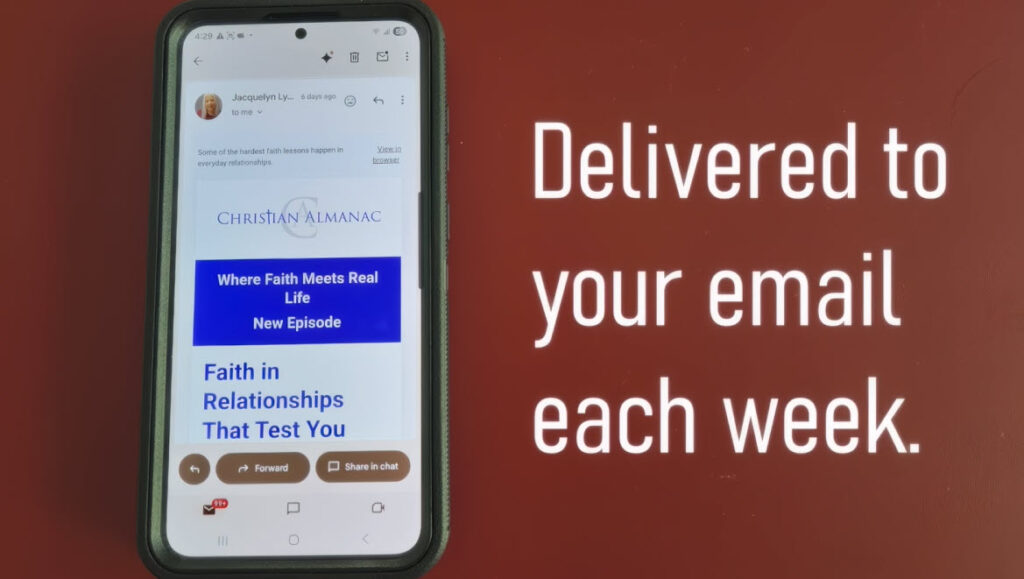
If you’re serious about integrating faith into the decisions you make every day, don’t leave it to chance.
Join the Christian Almanac email list, and each new episode will be delivered to your inbox as soon as it’s released.
No extra effort. Just clear, consistent input when it matters most.
You’ll also receive Shareable Saturday—concise insights you can apply immediately or share with your team.
Sign up at ChristianAlmanac.com/connect
Welcome back.
Sometimes we aren’t fooled because the lie is extraordinarily convincing.
We’re fooled because we want the lie to be true.
Think about how differently you might react to an opportunity depending on what it’s offering you.
If somebody presents you with something you don’t particularly care about, you may be pretty skeptical.
You ask questions, look for the details, and notice when something doesn’t quite add up.
But what if the offer is something you’ve been hoping for?
Maybe it’s a business opportunity promising the financial breakthrough you’ve been looking for. Or a prospective client offers you exactly the kind of prestigious project you’ve wanted. Maybe it’s even someone telling you exactly what you’ve been longing to hear.
Suddenly, your questions may not come quite as easily.
Because now there’s something at stake emotionally.
You want this to be true.
And once “I want this” takes over, our defenses can come down.
We can overlook something that would normally bother us, accept an explanation we might otherwise question, and give uncertainty the most favorable interpretation possible.
And sometimes we don’t even realize we’re doing it.
I think there are times when, looking back, we could honestly say:
I wanted this to be a good deal so badly that I stopped asking whether it really was.
That’s an important thing to recognize about discernment.
Our judgment about value can be distorted by something other than the facts.
Fear can do it. Pressure can do it. And so can desire.
Maybe it’s the opportunity you’ve been waiting for, a relationship you desperately want to work, or an investment you hope will finally put you ahead. Sometimes it’s simply hearing exactly what you wanted someone to say.
And wanting those things isn’t wrong.
The problem comes when wanting them starts changing the standard of evidence we’re willing to accept.
The Bible places a high value on prudence.
Proverbs 14:15 says:
“The simple believe anything, but the prudent give thought to their steps.” (Proverbs 14:15, NIV)
That doesn’t mean Christians should become suspicious of everyone and everything.
Discernment isn’t cynicism.
But prudence does mean we don’t automatically believe something just because we hope it’s true.
And sometimes the more appealing something is, the harder that becomes.
There’s a question worth asking:
Would this offer seem credible if it weren’t offering me something I really wanted?
That’s a tough one.
Jerry made a great observation about this. He said we ought to read contracts the same way we read Scripture—with exegesis [ex-e-gee-sis] rather than eisegesis [i-si-gee-sis].
Exegesis means drawing the meaning out of what’s actually there. Eisegesis means reading what we want or expect to find into the text.
We should read Scripture for what it actually says. And we should approach an offer, a contract, or an opportunity the same way.
Instead of looking for what we hope is there, we should slow down and ask what the words actually mean.
Because when we want an outcome badly enough, we can start helping the evidence make its case.
Instead of asking, “What does this information actually tell me?” we start looking for reasons to believe what we already hope is true.
Something doesn’t quite fit, and we explain it away. A concern comes up, and we decide it probably isn’t important. Before long, we’re spending more energy defending the possibility than evaluating it.
And then there’s urgency.
The opportunity won’t be there tomorrow. Somebody else is interested. The price is changing. You have to decide now.
Urgency doesn’t automatically mean something is dishonest.
Sometimes deadlines are real.
But urgency becomes especially powerful when it’s attached to something we desperately want.
Because now slowing down feels dangerous.
Taking time to investigate may feel like risking the opportunity. Asking more questions may feel like pushing too hard. And getting someone else’s opinion can feel especially risky—because they might tell us something we don’t want to hear.
And that last one may be especially revealing.
Sometimes we resist checking because we’re afraid checking might spoil the opportunity.
We don’t really want more information.
We want confirmation.
I know I have a tendency to make decisions quickly. When I get excited about something, I can be ready to move. Jerry is much more deliberate and cautious. And there are times when that difference is exactly what I need—someone who isn’t caught up in my enthusiasm asking, “Have we really thought this through?”
That’s one reason an outside perspective can be so valuable.
Someone who doesn’t have the same emotional investment in the outcome may see something we don’t.
They aren’t caught up in the prestige, the money, or the hope that this is finally going to work out.
So they may notice the red flag we’ve already found three reasons to explain away.
And here’s another problem.
We tend to think deception happens to other people.
We hear about someone who fell for a scam and think, How could they possibly have believed that? I would never fall for something like that.
But discernment requires humility.
Wisdom isn’t knowing that other people can be fooled.
It’s knowing we can be fooled too.
Being intelligent or experienced doesn’t make us immune. Neither does success. And spiritual maturity doesn’t mean our judgment can never be influenced by something we deeply want.
In fact, confidence in our own discernment can sometimes become part of the vulnerability.
If I believe I’m too smart to be fooled, I may not examine something as carefully as I should.
And deception doesn’t always come packaged as something obviously ridiculous.
Sometimes it comes wrapped around exactly what we want.
It may look like the business breakthrough we’ve been waiting for, the relationship we’ve hoped for, or the opportunity that finally seems to prove we’re as capable as we believed.
Even a ministry opportunity can appeal to something deep in us.
It may seem to validate everything we’ve believed about what we’re called to do.
Again, that doesn’t make the opportunity wrong.
It simply means desire is now part of the equation.
And that matters.
Because the more I want something to be true, the more deliberately I need to verify that it is.
Not because wanting something is foolish.
Not because hope is foolish.
But because hope can influence judgment.
There’s a difference between:
“The evidence convinces me this is true.”
And:
“I really want this to be true, so the evidence looks convincing.”
Those can feel remarkably similar when we’re in the middle of the situation.
Sometimes the person we need to be most suspicious of isn’t the salesperson.
It’s ourselves when we desperately want the salesperson to be right.
That doesn’t mean living in fear or assuming every opportunity is a trap.
It means recognizing something true about human nature—and about ourselves.
We are not completely objective.
What we want can affect what we’re willing to believe.
And recognizing that isn’t weakness. It’s part of discernment.
And knowing that can make us wiser.
The more I want something to be true, the more deliberately I need to verify that it is.
Because sometimes the hardest person to question isn’t the person making the offer.
It’s the person inside us already saying yes.
I’ll be back in a moment with this week’s Real Life Tip.
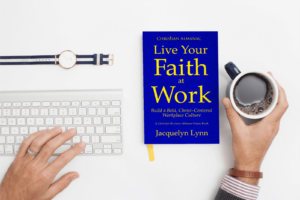
What would change if your faith shaped how you lead, decide, and treat people at work?
Live Your Faith at Work is a concise, practical guide for business owners, leaders, and professionals who don’t want their faith compartmentalized.
This Christian Business Almanac Focus book delivers clear, easy-to-apply direction for building a Christ-centered workplace culture—through leadership habits, communication, integrity, and care for people.
It’s not inspiration. It’s application.
Learn more and find purchase links at ChristianAlmanac.com.
That’s ChristianAlmanac.com.
You get an invitation, see an opportunity, or hear about something everyone else seems to be doing—and your first thought is:
What if I miss out?
That’s FOMO—the fear of missing out.
But this week’s Real Life Tip is about a different way to look at it:
Try JOMO—the joy of missing out.
Because sometimes saying no isn’t a loss.
It’s a relief.
Every yes costs us something.
Say yes to one more meeting, and you give up that block of time.
Say yes to another event, and you may give up an evening at home.
Take on one more project, and you give up some of the margin in your schedule.
Sometimes those are good trades.
But sometimes we say yes for one reason: we’re afraid of what we might miss if we don’t.
JOMO changes the focus.
Instead of asking, “What will I miss if I say no?” we can notice what saying no makes room for.
Less pressure.
More time.
A little breathing room.
The chance to focus on the people and responsibilities that really matter.
And yes, sometimes we really will miss something good.
The party may be fun. The opportunity may be worthwhile. The sale really may end tonight.
That still doesn’t mean we needed to say yes.
We don’t have to do everything, go everywhere, take advantage of every opportunity, or keep up with what everybody else is doing.
There’s freedom in accepting that some things can happen without us.
So when FOMO starts pushing you toward a yes you’re not sure about, remember JOMO.
Maybe you’ll miss out.
But maybe what you gain by missing out is worth even more.
Thanks for being here. See you next time.
Leave A Comment