
Christian Almanac: Where Faith Meets Real Life
Episode 38 Transcript
Transcript: Trust What You Know. Trust God With the Future.
Click on the  in each section below to read the podcast segments
Sometimes the difficult part of making a decision isn’t knowing what the facts tell us. It’s accepting what those facts might require us to do.
In Episode 38 of Christian Almanac, Jacquelyn Lynn explores why we sometimes ignore warning signs in relationships, business, and everyday decisions. She then turns to a different challenge: trusting God with an uncertain future without allowing fear to take over our lives.
Drawing on Scripture and a personal experience from September 11, 2001, Jacquelyn considers the difference between practical wisdom, unrealistic optimism, and genuine faith.
Below is the transcript of Trust What You Know. Trust God With the Future.
We make decisions every day based on what we know, what we believe, and what we want.
Most of the time, those things work together. But every now and then, what we want pulls us in one direction while the evidence in front of us is pointing somewhere else.
That’s when warning signs matter.
Sometimes the hardest warning signs to recognize are the ones we’ve already recognized—and decided we don’t want to believe.
Something happens that gives us pause.
Maybe somebody’s behavior doesn’t match what they’ve been telling us.
Maybe a trusted friend raises a concern.
Maybe we’re being pressured to move faster than we’re comfortable moving.
Maybe we’re being asked to excuse something, conceal something, or rationalize something we know isn’t right.
We see it.
But we want what’s on the other side of it so badly that we start talking ourselves out of what we already know.
And that’s when desire can overrule discernment.
Warning signs don’t always arrive as flashing red lights.
Sometimes it’s something that clearly conflicts with Scripture
or with values you’ve already decided matter to you
or a pattern of behavior that keeps contradicting someone’s words.
It might be somebody you trust saying, “I’m concerned about what I’m seeing”
or pressure to make a decision before you’re ready.
And sometimes it’s simply that persistent realization that you keep having to explain away things that shouldn’t need explaining.
One odd incident may not mean much.
One mistake certainly doesn’t define a person.
But when you find that you’re repeatedly telling yourself that something shouldn’t bother you when it does—that deserves some attention.
Because sometimes we’re not confused about what we’re seeing.
We’re conflicted about what acknowledging it might cost us.
Imagine you’re getting married in two weeks.
The invitations have gone out.
People have bought plane tickets.
The venue is booked.
Deposits have been paid.
Everybody knows you’re getting married.
And then something serious happens.
Maybe there’s infidelity.
Maybe an explosive side of the person comes out that you’ve never seen before.
Maybe you discover something that fundamentally changes what you thought you knew about the person you’re about to marry.
That should cause you to stop and ask, “What does this tell me?”
But that’s not always the question we ask.
Instead, we start asking, “How do I get past this without calling off the wedding?”
Because calling off the wedding would be embarrassing.
It would cost money.
People would ask questions.
Plans would have to change.
And maybe you still desperately want the future you thought you were going to have.
At that point, there’s a danger that you’re no longer evaluating the warning sign.
You’re figuring out how to justify ignoring it.
The same thing can happen in business.
You have an opportunity that looks tremendous.
The partnership has been announced.
Money has already been spent.
People are counting on the project moving forward.
Then the other party asks you to do something that perhaps isn’t technically illegal—but you know it isn’t right.
Maybe it violates an agreement.
Maybe it requires you to mislead somebody.
Maybe it crosses an ethical line you would have recognized immediately if you weren’t already so invested in making the deal work.
Now you have a choice.
But again, instead of asking, “What does this tell me about this person or this opportunity?” you may start asking, “How can I control this person’s behavior?” or “How can I make this work anyway?”
That’s how desire can change the standard we use to evaluate what we’re seeing.
Things we would immediately recognize as warning signs in somebody else’s situation become things we minimize in our own.
And spiritually, there’s another layer to this.
Sometimes the enemy doesn’t have to convince us that something obviously bad is good.
Sometimes he only has to convince us that what we want matters more than what we already know.
And we can even use spiritual language to dress up our determination to keep moving forward.
“I’m praying about it.”
“I’m waiting for confirmation.”
“I’m trusting God.”
And of course we should pray and seek God’s guidance.
James tells us simply that:
“If any of you lacks wisdom, you should ask God, who gives generously to all without finding fault, and it will be given to you.” (James 1:5, NIV).
But asking God for wisdom means being willing to accept wisdom that takes us somewhere we don’t want to go.
There’s a difference between asking God for guidance and asking him to bless a decision we’ve already made.
So if you’re in a situation where you’re wondering whether desire may be overriding discernment, there are a few things worth considering.
First: What facts am I explaining away?
Not vague fears. Not somebody else’s speculation.
Actual behavior.
Actual statements.
Actual inconsistencies.
Actual ethical concerns.
So ask yourself: What do I actually know—not what do I hope is true, but what do the facts in front of me tell me?
Then ask yourself: What would I advise somebody else to do if they described this exact situation to me?
We can sometimes see another person’s circumstances far more clearly than our own because we’re not emotionally invested in the outcome.
Then consider what you’re afraid you might lose if you pay attention to the warning sign and change course.
Maybe it’s money or an opportunity. Maybe it’s a relationship or your reputation. Or maybe it’s simply the embarrassment of having to tell people you changed your mind.
Sometimes what keeps us moving forward isn’t confidence that the decision is right.
It’s fear of the cost of backing out.
Another useful question is: Would I still make this decision if nobody knew I’d changed my mind?
If there were no audience, no embarrassment, no explanations required—would I make the same choice?
And then there’s the hardest one:
Am I asking God for guidance—or am I asking him to bless the decision I’ve already made?
There’s one important distinction I want to make here.
If somebody betrays you, lies to you, manipulates you, cheats on you, or mistreats you, that behavior is still their responsibility.
The fact that there may have been warning signs does not make you responsible for what somebody else chose to do.
You can look back and say, “I wish I had paid attention sooner,” without accepting blame for another person’s wrongdoing.
But WE are responsible for what we do with the truth once we see it.
And sometimes that truth is expensive.
You might lose money. You might disappoint people or have to change plans you’ve already made. And sometimes you have to face the much harder reality that something you desperately wanted simply isn’t what you thought it was.
That’s why the spiritual issue underneath all of this is really trust.
It’s easy to trust God when what we want and what wisdom tells us are pointing in the same direction.
The harder moment comes when they aren’t.
Do I trust God enough to walk away from something I desperately want when what I’m seeing tells me that’s what I should do?
Sometimes the hardest warning signs to recognize are the ones we’ve already recognized—and decided to ignore.
And sometimes discernment simply means being willing to believe what we already know.
When we come back, we’re going to shift from what we know today to what we can trust about tomorrow—and why I still have faith in the future.
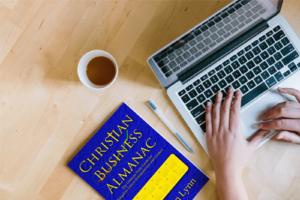
Most leaders don’t struggle with believing—they struggle with applying.
Christian Business Almanac bridges that gap.
This page-a-day resource brings Scripture, wisdom, and practical perspective into the real decisions you face at work and in leadership—day after day, all year long.
No fluff. No shortcuts. Just steady, biblical guidance for people who want their faith fully integrated with how they lead, work, and live.
Discover more and find purchase links at ChristianAlmanac.com.
That’s ChristianAlmanac.com.
Welcome back.
On September 11, 2001, Jerry and I sat in front of the television watching something neither of us could quite comprehend.
We watched planes fly into buildings.
We watched those buildings come down.
We watched thousands of people die and knew that countless lives had changed forever.
Nothing in our lives had prepared us for anything like that.
We live in a safe suburban community. We were bewildered. Frightened. And like so many other people that day, we stayed glued to the television.
Then, for some reason, I went out into the garage.
And it was flooded.
Water was pouring out from the air conditioner.
I called the company that had installed it, and when the owner answered, I said, “I can’t believe I’m calling you about something so mundane after what’s happened today, but my garage is flooding.”
I don’t remember exactly what he said, but he figured out that the drain from the air-conditioning unit was clogged.
And instead of scheduling a service call and charging us for it, he told Jerry how to clear the drain with a garden hose. Then he explained what we could do so it wouldn’t happen again.
And strangely enough, that was the moment when I knew the world was not ending.
Now, obviously, a clogged air-conditioner drain didn’t tell me anything about world events.
But that ordinary little problem—and that honest business owner who helped us solve it—reminded me of something I desperately needed to remember that day.
The world was still full of people doing their jobs.
People were still helping one another.
There were still problems to solve, families to care for, commitments to keep, customers to serve and ordinary acts of goodness happening everywhere.
Evil had done something horrific.
But evil had not consumed everything.
That experience stayed with me.
Because there have been plenty of times since then when people have looked at what was happening in the world and announced that everything was falling apart.
Wars.
Disease.
Natural disasters.
Political turmoil.
Social unrest.
Economic problems.
And whenever something frightening happens, it usually isn’t long before somebody starts connecting it to biblical prophecy and announcing that the end is near.
Christians have been doing that for a very long time.
And someday, Christ will return.
I absolutely believe that.
But here’s something else I believe because Jesus said it very clearly:
We don’t know when.
Mark wrote that Jesus said specifically,
“But about that day or hour no one knows.” (Mark 13:32, NIV)
So when somebody tells you that they’ve figured out exactly when Christ is returning—or that some current event proves that they know where we are on God’s timetable—I don’t think we need to rearrange our lives around their prediction.
Jesus said we don’t know.
And I think there’s freedom in that.
We weren’t told to figure out the date.
We weren’t told to live frightened by every headline.
And we weren’t told to spend our lives expecting the next terrible thing to happen.
That doesn’t mean pretending terrible things don’t happen.
They do.
It doesn’t mean assuming tomorrow is guaranteed to be easy, comfortable or even good by our definition of good.
Faith about tomorrow is not the same thing as predicting a good tomorrow.
I don’t know what tomorrow is going to bring.
Neither do you.
But I also don’t think there’s any virtue in expecting disaster.
Sometimes we can become so accustomed to anticipating what might go wrong that we start living through bad things before they ever happen.
We worry about what the economy might do.
What our health might do.
What our family might do.
What the government might do.
What the world might do.
And most of those things are outside our control.
In Matthew 6:34, Jesus said:
“Do not worry about tomorrow, for tomorrow will worry about itself.” (Matthew 6:34, NIV)
That doesn’t mean we shouldn’t plan.
It doesn’t mean we shouldn’t prepare.
And it certainly doesn’t mean we should ignore real problems.
It means tomorrow does not need our fear today.
There’s a difference between being realistic and being pessimistic.
There’s a difference between preparing for possibilities and assuming the worst.
And there’s a difference between paying attention to what’s happening in the world and allowing it to convince us that everything good is disappearing.
I choose optimism.
Not because I think nothing bad will happen.
Not because I believe every problem will work out the way I want it to.
But because optimism is simply a better way to live than constantly expecting disaster.
And for a Christian, optimism can rest on something stronger than positive thinking.
Whatever happens tomorrow, God is already there.
That’s what gives me faith about the future.
And while we’re waiting for tomorrow, there’s still something worthwhile to do today.
Our A/C guy who took my call on September 11 had no idea what that brief conversation meant to me.
He was simply doing his job.
He answered a customer’s question.
He saved us the cost of a service call.
He helped Jerry solve an ordinary household problem.
And in doing that, he reminded me that ordinary faithfulness still mattered—even on one of the darkest days I had ever witnessed.
Most of us are not going to solve the world’s biggest problems today.
But there’s still work to do.
There are still people to care for.
There are still commitments to keep.
And there are opportunities every day to be honest, useful, generous and kind.
Fear keeps looking toward the horizon for the next catastrophe.
Faith notices that there is still something worthwhile to do right here.
I don’t know what tomorrow will bring.
None of us does.
But I don’t need to know what’s going to happen tomorrow to have faith about tomorrow.
I know God is already there.
And as long as we’re here, there’s still good work for us to do.
I’ll be back in a moment with this week’s Real Life Tip.
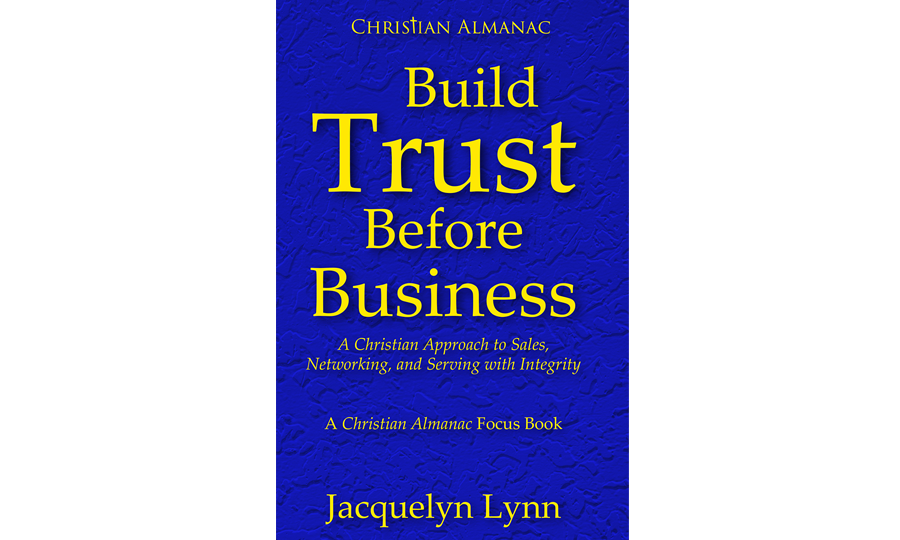
Sales and networking can sometimes make people feel as though they have to choose between growing their business and staying true to their values.
Build Trust Before Business offers another way.
This practical, faith-centered guide helps Christian professionals, business owners, entrepreneurs, salespeople, and ministry leaders approach sales and networking with honesty, wisdom, service, and respect.
Readers will learn how to explain what they offer clearly, listen before presenting, discuss price without pressure, respond to objections honestly, follow up respectfully, and build relationships that are generous rather than transactional.
Build Trust Before Business—a Christian Almanac Focus Book.
Are you one of those people who has two or three browser tabs open at a time?
Or are you like me, and you sometimes have 20 or 30? Or more?
This week’s Real Life Tip is about how to tame all those tabs.
Most major browsers now have ways to organize related tabs. I use Google Chrome, so that’s what I’m going to describe, but if you use Firefox, Safari, Edge or another browser, look for its tab-group or workspace feature.
In Chrome, it’s called Tab Groups.
This is one of those things that’s easier to understand when you can see it, but once you know what to look for, it’s very simple.
Let’s say I’m doing research for the podcast. I might have several articles open, a Google Doc, maybe a couple of reference sites—and I want to keep all of them together.
I can right-click on one of those tabs, choose Add Tab to Group, then New Group.
I give the group a name—maybe “Podcast Research”—and choose a color.
Then I can drag other open tabs into that group.
Here’s the part I really like: click on the group name, and all those tabs collapse. They’re still there, but they’re no longer taking up half the top of my screen.
Click the group name again, and they all open back up.
You can also save tab groups, close them when you don’t need them, and reopen them later. And if you use Chrome on more than one device, your saved groups can sync across them.
So you could create separate groups for a project, travel planning, online shopping, research—or whatever else has you opening tab after tab after tab.
If your browser regularly looks like a filing cabinet exploded across the top of your screen, try grouping those tabs.
You don’t necessarily need fewer tabs.
You may just need a better way to organize them.
Thanks for being here. See you next time.