
Christian Almanac: Where Faith Meets Real Life
Episode 34 Transcript
Transcript: Faith When You Have Questions and No Answers
Click on the  in each section below to read the podcast segments
Can questioning God be an expression of faith? And how do we make responsible decisions when we’ve prayed but don’t have a clear answer? In Episode 34 of Christian Almanac, Jacquelyn Lynn considers why honest questions aren’t necessarily signs of unbelief and how to keep trusting God without pretending to have certainty about the future.
Below is the transcript of Faith When You Have Questions and No Answers.
Have you ever had something happen and thought, “God, I don’t understand this—and I’m not even sure I’m supposed to ask you why”?
A lot of Christians have come to believe that strong faith means not questioning God.
We’re supposed to trust. We’re supposed to believe that God has a plan. We’re supposed to accept what happens and keep moving forward.
And trust does matter.
But questioning God is not the same as rejecting God.
There’s a difference between turning away from God and bringing our questions to him.
Sometimes the very act of asking God a difficult question shows that we’re still turning toward him.
The Bible gives us plenty of examples of that.
Psalm 13 begins with David asking, “How long, O Lord? Will you forget me forever?”
He goes on asking how long God will hide his face from him and how long he will have to wrestle with sorrow.
Those aren’t polished, carefully edited religious words.
David is distressed, and he says so.
What’s especially interesting about that Psalm is that it begins with questions and ends with trust. David says he will trust in God’s unfailing love.
But the Psalm never tells us that his circumstances changed.
He doesn’t get an explanation in the middle and then say, “Okay, now I understand.”
The questions are still there.
And so is the trust.
That pattern shows up other places in Scripture too.
Habakkuk looks at violence and injustice around him and essentially asks God, “How long am I going to cry out while nothing seems to change?”
Job has plenty of questions about suffering he can’t understand.
And even Jesus, on the cross, uses the words of Psalm 22: “My God, my God, why have you forsaken me?”
So Scripture does not give us a picture of faithful people who never ask God why.
And I think that matters, because sometimes we put pressure on ourselves to skip that question.
I’ve done that.
I’ve said that when something happens that we don’t understand, instead of asking, “Why is this happening?” we should move toward questions like, “What can I learn from this?” or “How can I grow through this?”
I still think those questions can be valuable.
But I don’t think we should rush past “Why?”
Sometimes “Why?” is the honest prayer.
Sometimes something hurts, shocks us, or changes our lives in a way we never expected, and we genuinely do not understand why God allowed it.
We don’t have to immediately turn that pain into a lesson.
And we should be especially careful about doing that to someone else.
Think about it.
Someone experiences a terrible loss, a betrayal, a serious setback, or a prayer that seems to have gone unanswered, and Christians sometimes rush in with questions like, “What is God trying to teach you through this?”
Maybe there will eventually be something to learn.
Maybe there will be growth.
Maybe something good will come out of circumstances that were very bad.
But that does not mean every tragedy was assigned as a lesson we’re supposed to figure out.
Sometimes the faithful response is simply to say, “God, I don’t understand.”
And I believe God is big enough for that.
He’s big enough for questions that come out raw, confused, or even angry.
Prayer should not be the place where we edit what we’re really thinking into what we imagine a good Christian is supposed to say.
God already knows what we’re thinking.
So if we’re confused, we can tell him.
If we’re angry, we can tell him.
If we’re afraid, we can tell him.
And if the question in our heart is “Why?” we can ask why.
Now, there’s a difference between honestly questioning God and demanding that God justify himself to us before we’ll trust him.
Faith doesn’t mean God owes us an explanation for everything he does.
But neither does faith require us to pretend we don’t have questions.
Those are two very different things.
At some point, other questions may become important too.
James 1:5 tells us that if we lack wisdom, we should ask God for it.
That’s an important distinction.
We may not get an explanation for why something happened.
But we can still ask for wisdom about what to do now.
What’s within my responsibility?
What would faithfulness look like in this situation?
What’s the next thing I need to do?
Those questions don’t have to replace “Why?”
They can exist alongside it.
And I think we can extend that same grace to other people.
When someone tells us they’re struggling with God, we don’t always have to correct them, explain the situation, defend God, or give them an encouraging slogan.
Sometimes we can simply let them say, “I don’t understand.” And just be there for them.
Faith does not require us to pretend there are no questions.
Sometimes faith is continuing to bring those questions to God.
Ask why when you need to ask why.
Tell God when you’re confused, angry, frightened, or disappointed.
And don’t mistake an honest question for a failure of faith.
Because sometimes the hardest part comes after we’ve asked the question.
What do we do when God doesn’t seem to answer?
That’s what we’ll talk about when we come back.
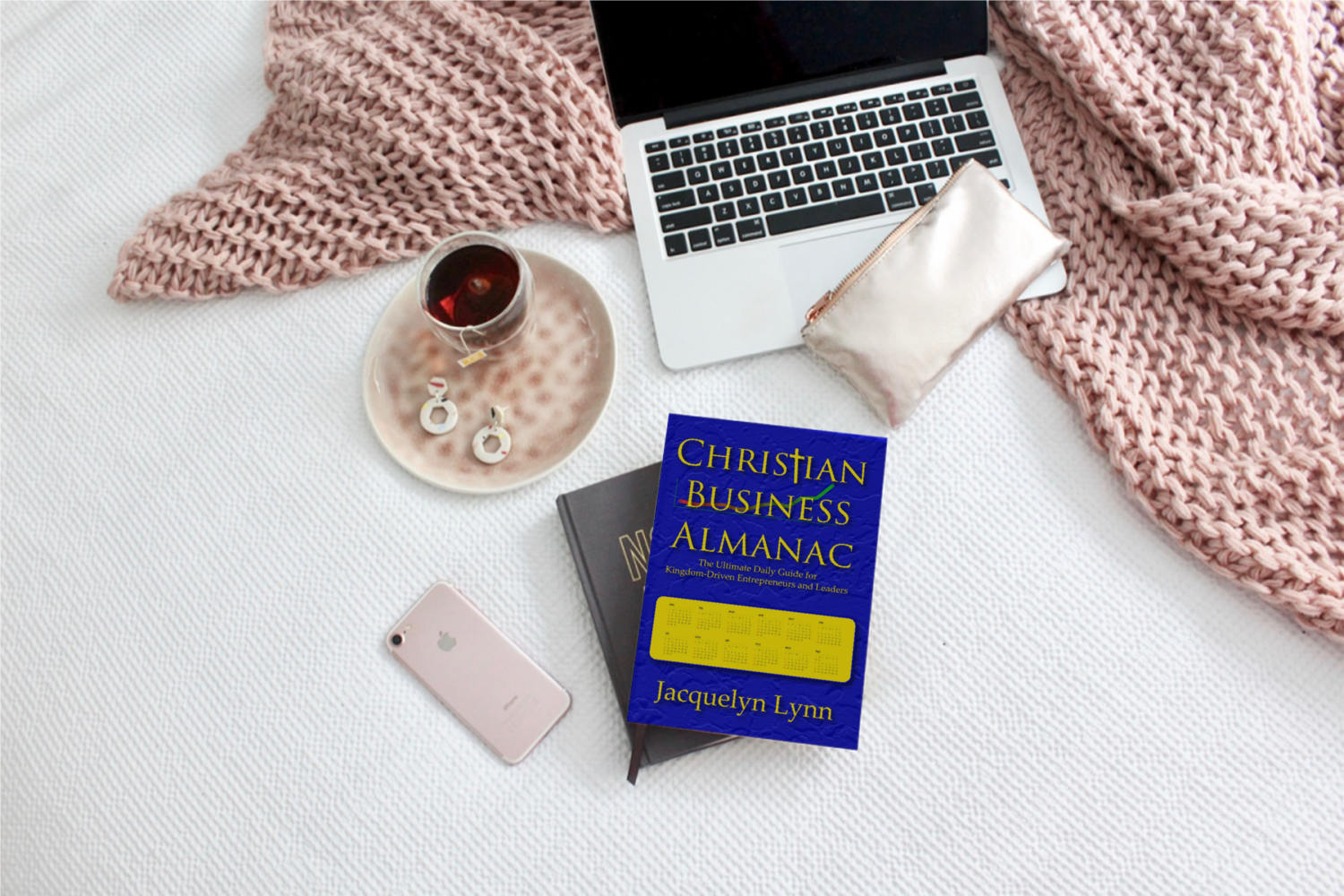
What if the most meaningful gift you gave this year wasn’t a gadget… but guidance?
Christian Business Almanac delivers daily, practical wisdom for leaders and professionals who want to integrate faith with real-world work.
It’s a thoughtful gift for managers, team members, customers, colleagues, and students—encouragement they can return to all year long.
Bulk discounts are available when you order 10 or more copies.
Strengthen your culture. Invest in your people.
Visit christianalmanac.com/bulk to learn more and order today.
Welcome back.
It’s one thing to believe you’re allowed to ask God a question.
It’s another thing entirely to ask—and hear nothing.
You pray for direction and still don’t know what to do. You pray for a relationship to change and nothing seems to happen. You ask God to make the next step clear, and it still isn’t.
Sometimes the hardest part isn’t the question.
It’s the silence that follows.
Now, when I say God doesn’t answer, I’m not making a theological claim that God literally never responds.
I’m talking about the very real experience of praying and not receiving an answer we can recognize, understand, or act on.
So what do we do then?
One thing we need to be careful about is manufacturing an answer simply because uncertainty makes us uncomfortable.
When we really want direction, almost anything can start to look like a sign.
Something happens that seems like a coincidence. Someone says something that connects with what we’ve been praying about. We read a verse that suddenly feels especially relevant.
And before long, we may be saying, “God told me.”
God can certainly use circumstances, other people, or Scripture to guide us.
But there’s a difference between noticing something that gets our attention and confidently declaring that God has given us a specific instruction.
Sometimes we would rather have a questionable answer than admit that we still don’t know.
And that’s especially tempting when the decision matters.
Maybe you’re trying to decide whether to take a job, make a move, or take a risk that could change things significantly.
There’s nothing wrong with praying about those things. You should.
But there’s a difference between saying, “I prayed about this, I’ve thought it through, and this is the decision I believe I should make,” and saying, “God told me to do this,” when we’re really not sure he did.
When God hasn’t made the answer clear, we can still go back to what he has already made clear.
You may not know which job to take, but you know you should act ethically.
You may not know whether a relationship will be repaired, but you still know how you should treat the other person.
You may not know how a business decision will turn out, but you don’t need a special revelation to know that dishonesty or manipulation is off the table.
When God hasn’t made the outcome clear, we can still be faithful with what he has already made clear.
And that includes using the wisdom and judgment he’s given us.
We can gather the information we need, think through the consequences, and talk with people whose judgment we trust.
Sometimes that ordinary process of using wisdom is exactly what we’re supposed to do.
James 1:5 says that if we lack wisdom, we should ask God for it.
But wisdom and certainty are not the same thing.
Sometimes wisdom helps us make a decision.
It doesn’t necessarily remove the need to make one.
And sometimes, after we’ve prayed, thought carefully, and sought good counsel, there still isn’t one obviously right answer.
That can be hard to accept.
Because sometimes what we’re really asking God for isn’t direction.
It’s a guarantee.
We want to know that if we take the job, it will work out. Or if we make the move, we won’t regret it.
We want God to remove the risk from the decision.
But faith doesn’t always give us that kind of certainty.
Sometimes we have to make the wisest decision we can with what we know, then trust God with the outcome.
That doesn’t mean being careless and calling it faith.
It means making a responsible decision while recognizing that we still can’t control the outcome.
There are times when waiting is exactly what we should do.
But there are also times when waiting becomes a decision of its own.
A deadline arrives. Someone needs an answer. An opportunity won’t remain open forever.
And we still haven’t received the unmistakable direction we were hoping for.
At that point, it may help to ask:
Do I genuinely need more information?
Or am I waiting because I’m afraid to make a decision without certainty?
That can be an uncomfortable question.
But sometimes “I’m waiting on God” becomes a way of avoiding responsibility for a choice we don’t want to make.
Of course, not every unanswered prayer is about a decision.
Sometimes what we’re praying about is something we can’t fix.
It may be someone we love who is sick, a relationship we can’t repair by ourselves, or a situation we simply have no power to change.
In those situations, there may not be a decision that solves the problem.
The next faithful step may simply be to keep praying and keep doing what is still ours to do, even though we can’t fix the larger situation.
Paul gives us an interesting example in 2 Corinthians 12.
He says he pleaded with the Lord three times to take away what he called a thorn in the flesh.
The circumstance didn’t change the way Paul had asked.
Instead, the answer he received was, “My grace is sufficient for you.”
So sometimes what feels at first like no answer may eventually turn out to be an answer we didn’t expect.
But I think we also need to leave room for something harder.
Sometimes we never get that kind of clarity.
That doesn’t necessarily mean we prayed wrong, missed a sign, or failed to listen closely enough.
We don’t know why something happened.
We don’t know why it didn’t change.
And we may never know.
That brings us back to where we started.
When we don’t hear an answer, that doesn’t give us permission to invent God’s voice.
We don’t have to manufacture certainty just to prove that we have faith.
Sometimes faith gives us an answer.
Sometimes it gives us enough wisdom to take the next step.
And sometimes faith means taking that step while admitting we still don’t know.
We can pray, use the wisdom God has already given us, make the best decision we can, and trust him with what we can’t know.
I’ll be back in a moment with this week’s real life tip.
If you spend your days making decisions, solving problems, and carrying responsibility, you also need moments that restore you.
Not more input. Not more strategy. Just quiet focus.
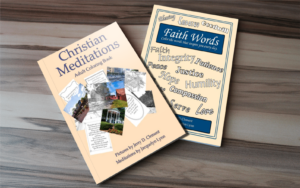
Christian Meditations pairs detailed illustrations with biblically grounded reflections—creating space to slow your thoughts and center your heart.
And Faith Words: Color the Words that Inspire You Every Day invites you to sit with one meaningful word at a time—coloring it in as you let its truth settle in.
A simple practice. A steady rhythm. Faith that meets real life—even in the quiet moments.
Available on Amazon or at your favorite bookstore.
Like most people with any kind of online presence, I get plenty of spam emails.
For me, a lot of it comes from scammers pitching book publishing or marketing services. For other people, one of the most common scams is a job offer that looks legitimate.
It used to be fairly easy to spot many of these emails. The writing was awkward, the grammar was bad, or there were obvious typos.
AI has changed that.
Scammers can now create professional-looking, personalized messages that appear completely legitimate—but are designed to get you to click a link, send money, or give up personal information.
So this week’s Real Life Tip is one way to look a little deeper before you trust an email.
I learned this from an article Victor M. Font published on LinkedIn. Victor is an IT and cyber governance expert, and I’ll include a link to his article in the show description.
His basic advice is this: Don’t rely only on the name and email address you see in the “From” line. Look at the email’s actual routing and delivery information.
That information is in the email headers, and it can tell you more about where the message actually came from.
Different email programs display those details differently, so search for instructions for your particular email service—or ask your preferred AI tool how to view the full headers or routing information for a message.
You may discover, for example, that an email that appears to come from a legitimate company was actually sent through a completely unrelated account or mail service.
That alone doesn’t necessarily prove the email is a scam, but it’s a good reason to stop and verify the sender before you respond, click a link, or share any information.
Victor’s article walks through an email he received that appeared to come from an executive recruiter and explains how he determined that the sender wasn’t who they claimed to be.
It’s worth reading. The link is in the show description. [Link: https://www.linkedin.com/pulse/recruiter-looked-real-email-header-told-different-story-font-jr–tliqe/
The larger lesson is simple: A professional-looking email is no longer proof that the person who sent it is legitimate. Take a minute to look behind the “From” line before you trust what you see.
Thanks for being here. See you next time.
Leave A Comment