
Christian Almanac: Where Faith Meets Real Life
Episode 32 Transcript
Transcript: When Words Aren’t Enough: Promises, Actions, and Trust
Click on the  in each section below to read the podcast segments
In Episode 32 of Christian Almanac, Jacquelyn Lynn looks at two sides of trust: what it means to keep your own word when circumstances change, and how to respond when another person’s actions repeatedly contradict what they say.
When I was a kid, there was a way to make a promise without really making a promise.
You crossed your fingers.
You could tell someone you would do something, or insist that you were telling the truth, but if you had your fingers crossed behind your back, somehow that meant it didn’t count.
At least, that was the theory.
Of course, a kid only had to get caught doing that once or twice before the others figured something out: You couldn’t trust that kid.
The crossed fingers weren’t really the issue. The issue was that the person making the promise had already decided that there were circumstances in which their word didn’t have to mean what it sounded like it meant.
And unfortunately, we don’t always outgrow that.
We just come up with more sophisticated ways to justify it.
I’ve been thinking about that in connection with oaths.
An oath is a solemn promise, often invoking God or something considered sacred or deeply important, about what a person promises to do or not do.
It’s an outward expression of an internal commitment. You are publicly saying: This is what I promise to do. You may hold me to it.
We see oaths in government, in the military, in courtrooms and in other situations where the commitment being made is considered serious enough that a casual promise doesn’t seem adequate.
And there’s often some ceremony surrounding it.
Someone raises a right hand. Someone else administers the oath. Sometimes the person taking it places a hand on a Bible or another book or document that has special meaning.
It’s interesting that swearing an oath on a Bible has been part of American culture since the country’s beginning, but the Constitution doesn’t require a Bible for an oath of office. In fact, the Constitution specifically recognizes both an oath and an affirmation. That means someone who objects to swearing an oath can affirm the same commitment instead. Either way, the commitment is just as binding. The Constitution requires the promise; it doesn’t require a particular religious ceremony or something to swear on.
The object used as part of the ceremony isn’t what makes the oath binding.
And I think that’s worth remembering, because we sometimes focus more attention on what someone is putting a hand on rather than on the words coming out of that person’s mouth.
Think about what we mean when we say we swear on something.
Someone might say, “I swear on my mother’s grave.”
Or, “I swear on my children.”
Or, “I swear on the Bible.”
Why do we say things like that?
We’re trying to add weight to our words. We’re invoking something we consider precious or sacred as evidence that we really mean what we’re saying.
But putting your hand on something sacred can’t make you honest.
A Bible can’t make you keep an oath.
The Constitution can’t make you keep an oath.
No ceremony can make you keep an oath.
Ultimately, the meaning of the oath depends on the character and integrity of the person making it.
And we see what happens when that integrity fails.
We’ve seen politicians violate the oaths they took when they entered office. We’ve seen government employees violate their oaths. We’ve seen people in all kinds of positions of public trust fail to honor solemn commitments they made.
When that happens, it can—and often should—damage their reputations. It can tarnish accomplishments that might otherwise have been respected.
Because an oath tells other people something about you.
It says, You can rely on my word.
And breaking that oath tells them something, too.
The real test often comes when keeping that oath becomes difficult. And that’s where situational ethics can get in the way of integrity.
We start finding reasons why the promise we made shouldn’t apply in this particular situation.
I meant it when I said it, but things have changed.
I made that commitment, but I didn’t know this was going to happen.
I promised to uphold this principle, but now following it is going to cost me something.
We begin looking for exceptions.
And sometimes circumstances really do change. Sometimes we learn things we didn’t know before. Sometimes commitments create genuine moral or legal conflicts that need to be addressed carefully.
But a promise becoming harder, more costly, or less convenient to keep doesn’t mean the promise no longer applies. We don’t get to decide that our word no longer counts simply because keeping it has become uncomfortable or costly.
That’s one reason we shouldn’t make oaths casually.
Ecclesiastes 5:5 puts it very plainly: “It is better that you should not vow than that you should vow and not fulfill it.” (NRSVUE)
If you’re going to solemnly promise that you will do something, you need to understand the significance of what you’re saying before you say it.
And once you make that oath, you don’t get to quietly rewrite it when keeping it becomes difficult.
Jesus addressed the whole issue of oath-taking in the Sermon on the Mount.
Jesus said:
“Again, you have heard that it was said to those of ancient times, ‘You shall not swear falsely, but carry out the vows you have made to the Lord.’ But I say to you: Do not swear at all, either by heaven, for it is the throne of God, or by the earth, for it is his footstool, or by Jerusalem, for it is the city of the great King. And do not swear by your head, for you cannot make one hair white or black. Let your word be ‘Yes, Yes’ or ‘No, No’; anything more than this comes from the evil one.” (Matthew 5:33-37, NRSVUE)
There are different Christian traditions regarding whether that passage prohibits formal oath-taking altogether. But the principle Jesus gives us about personal integrity is unmistakable.
We should be so truthful that our word is sufficient.
If we say yes, people should be able to trust that we mean yes. If we say no, they should know that we mean no. And if we say we’re going to do something, we should do it.
We shouldn’t need to swear on a Bible, or on someone’s grave, or on the heads of people we love to convince somebody that we’re telling the truth.
And we certainly shouldn’t have the adult equivalent of crossing our fingers behind our backs.
The ceremonial part of an oath can be meaningful. There’s nothing wrong with that. Public ceremonies remind us that serious responsibilities are being accepted. A Bible, a different holy book, or another meaningful object can represent the values a person believes should guide that commitment.
But the object is a symbol.
The oath is the promise.
And the real evidence that the oath meant something comes later.
It comes in the decisions you make when keeping your word is inconvenient.
It comes when circumstances change.
It comes when honoring your commitment costs you something.
It comes when you could probably get away with doing something else.
That’s when we find out what the oath—and the person who made it—are really worth.
So when you hear someone take an oath, listen to the words. Then watch what that person does.
And when you make a promise yourself—whether anyone calls it an oath or not—remember what your word tells people about you.
Don’t cross your fingers.
Don’t look for the loophole.
Don’t let changing circumstances turn your principles into situational ethics.
Know what you’re promising before you promise it.
And once you give your word, make sure the way you live proves that your word means something.
When we come back, we’ll look at the other side of trust—what to do when someone’s words say one thing, but their actions are telling you something else.

What if your daily business coach lived three thousand years ago?
In Words to Work By, Jacquelyn Lynn brings practical workplace wisdom from the Book of Proverbs into today’s boardrooms, break rooms, and inboxes.
These 31 short, focused devotions offer insight on leadership, integrity, wise decision-making, diligence, and professional relationships — the principles that shape both character and results.
Each reading is concise and immediately applicable — perfect for starting your workday, opening a meeting, or resetting your mindset mid-afternoon.
Timeless wisdom. Modern work.
Words to Work By is available now on Amazon and wherever books are sold.
Have you ever had someone do something that bothered you—and almost immediately found yourself explaining it away for them?
They probably didn’t mean it.
That’s not really who they are.
Maybe I’m making too much of it.
And sometimes those explanations are fair. Everybody makes mistakes. Everybody has bad days, and one bad decision doesn’t necessarily define someone’s character.
But there’s a difference between giving someone grace for a mistake and repeatedly making excuses for a pattern.
People tell us a lot about who they are by what they consistently do.
The problem is, sometimes we don’t want to believe what we’re seeing.
We may love the person. We may have a long history with them. We may have invested a lot in the relationship.
Or we may want what they’re promising so badly that we overlook things we would otherwise recognize as warning signs.
Maybe it’s a business opportunity we really want to work.
Maybe it’s someone we’re thinking about hiring or partnering with.
Maybe it’s a leader promising an outcome we strongly want.
Or maybe it’s someone close to us who keeps saying that next time will be different.
So we focus on what we hope will happen instead of paying attention to what has already happened.
And that can get us into trouble.
If someone does something that hurts you or violates your trust, that doesn’t guarantee they’ll do it again.
People can learn, they can grow, repent, and change.
But what happened still matters.
A red flag isn’t necessarily a verdict. It’s a reason to pay closer attention.
Was this really an isolated mistake?
Did the person acknowledge what they did?
Did they take responsibility for it?
Did they try to make it right—and did anything actually change afterward?
Because an apology matters. A promise to do better matters. But what happens next matters more.
Sometimes we keep believing the promise long after the behavior has shown us something very different.
And I think one reason we do that is because accepting the truth may require us to make a decision we don’t want to make.
If I admit this person isn’t dependable, I may have to stop relying on them.
If I admit this person isn’t honest with me, I may have to change the relationship.
If I admit an employee can’t be trusted with a certain responsibility, I may have to take that responsibility away.
And if someone repeatedly ignores a boundary, I may have to enforce it.
Sometimes accepting people as they really are means adjusting our expectations.
Sometimes it means limiting the amount of trust we give them.
Sometimes it means changing the nature of the relationship.
And yes, in some situations, it may mean removing someone from our life altogether.
Accepting someone for who they are doesn’t mean approving of everything they do.
It means we stop building our expectations around who we wish they were.
Jesus said something in Matthew 7 that fits here. He was specifically warning about false prophets, but the principle is useful far beyond that setting.
He said, “You will know them by their fruits.”
In other words, pay attention to what their lives produce.
Words matter. Promises matter. Intentions matter.
But actions give us evidence.
And that’s especially important when we have a strong emotional reason to believe what someone is telling us.
The more we want what someone is offering, the easier it can be to overlook the evidence that says we should be cautious.
That’s also where those gut feelings sometimes come in.
Not every uneasy feeling is necessarily telling us the truth. Our instincts can be influenced by fear, past experiences, assumptions, and all kinds of things.
But we shouldn’t automatically dismiss them either.
If something doesn’t feel right, instead of saying, “Oh, I’m probably imagining it,” stop and ask yourself why.
What are you noticing?
Is something inconsistent?
Does what the person is saying match what they’re doing?
Is there a pattern you’ve been explaining away?
That’s discernment.
Proverbs 14:15 says, “The simple believe everything, but the clever consider their steps.” (Proverbs 14:15, NRSVUE)
That doesn’t tell us to become cynical or suspicious of everybody.
It tells us not to be gullible.
There’s an important difference.
As Christians, we’re called to love people. We’re called to extend grace. We’re called to forgive.
But none of those things requires us to pretend that damaging behavior isn’t damaging.
Grace does not require gullibility.
Forgiveness does not automatically restore trust.
Trust is built—or rebuilt—by what someone consistently does over time.
And there’s another distinction that matters.
You can believe someone is capable of changing without pretending they already have.
It’s easy to confuse those two things.
We see someone’s potential and begin relating to them as though that potential were already reality.
But potential isn’t character.
Promises aren’t change.
Changed behavior is the evidence of change.
So when someone disappoints you or does something that raises a concern, you don’t have to immediately decide that they’re a terrible person.
And you don’t necessarily have to end the relationship.
But you should pay attention.
Look at the pattern.
Look at how they respond when they’re confronted.
Look at whether their actions begin to match their words.
And ask yourself whether you’re overlooking what you see because you want a different outcome.
You can hope for the best in people without ignoring reality.
You can pray for someone to change.
You can encourage them.
You can forgive them.
You can leave room for growth.
But when you’re deciding how much trust to give someone today, base that decision on who they are showing you they are today.
Leave room for people to change.
But don’t confuse the possibility of change with evidence that it has happened.
I’ll be back in a moment with this week’s real life tip.
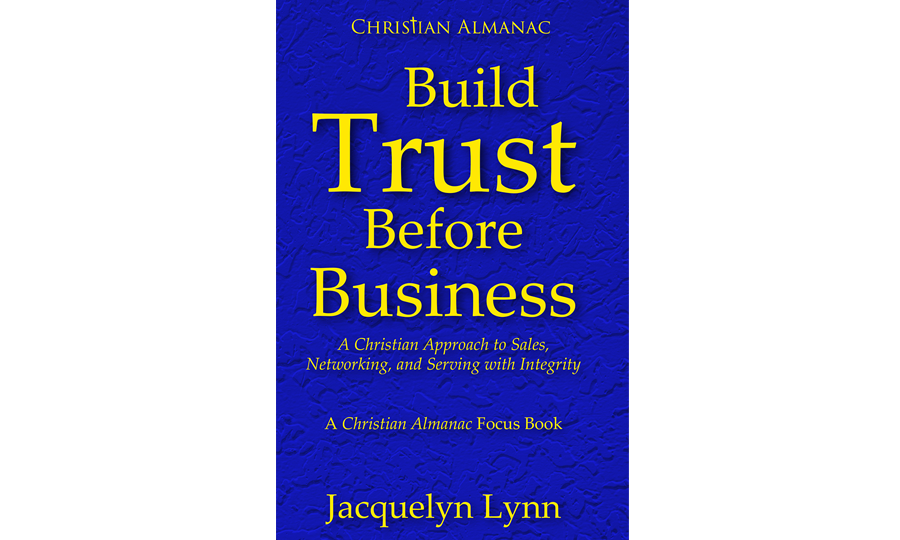
Sales and networking can sometimes make people feel as though they have to choose between growing their business and staying true to their values.
Build Trust Before Business offers another way.
This practical, faith-centered guide helps Christian professionals, business owners, entrepreneurs, salespeople, and ministry leaders approach sales and networking with honesty, wisdom, service, and respect.
Readers will learn how to explain what they offer clearly, listen before presenting, discuss price without pressure, respond to objections honestly, follow up respectfully, and build relationships that are generous rather than transactional.
Build Trust Before Business—a Christian Almanac Focus Book.
Have you ever hit Send on an email—and then immediately spotted a mistake?
Maybe it was a typo. Maybe you forgot an attachment. Maybe a link didn’t work. Or maybe you reread what you wrote and realized it didn’t say quite what you meant.
This week’s real life tip is simple: Take a few minutes to proof your email before you send it.
Whether you’re sending a marketing email to thousands of people, a business message to one client, or a note to family or friends, accuracy and clarity matter.
Start with the subject line. Does it make sense? Does it actually match the message? Check for typos, and make sure you didn’t leave in any placeholder text.
Then check the body of the email. Look for spelling and grammar errors, but also read for clarity. Short paragraphs usually work better in email, especially for people reading on their phones.
If you use a grammar or spellchecker, that’s helpful—but don’t let it replace a human review. Software can tell you a word is spelled correctly. It can’t always tell you that it’s the wrong word. And keep an eye out for those autocorrects—sometimes they’re helpful, but sometimes they’re embarrassingly wrong.
Check every link. Make sure it works and goes where you intended. If you’ve included images, be sure they display properly and that any linked images go to the right place.
Then check the facts. Are names spelled correctly? Are statistics, dates, quotes, and other details accurate? If you said you were going to give readers five tips, make sure there are actually five.
Look at the closing. Is the sign-off appropriate? Is your signature information current? If there’s a P.S., proof that too.
And if you’re using an email marketing service, don’t ignore the footer just because it’s part of a template. Check your contact information, required disclosures, and links from time to time to make sure everything is still current and working.
You’ll never eliminate every mistake. But you can prevent a lot of embarrassing ones from landing in someone else’s inbox with a few extra minutes of proofreading.
Thanks for being here. See you next week.
Leave A Comment