
Christian Almanac: Where Faith Meets Real Life
Episode 28 Transcript
Transcript: What We Celebrate, What We Repeat, and Why It Matters
Click on the  in each section below to read the podcast segments
What do our celebrations and repeated practices reinforce in us over time? In Episode 28 of Christian Almanac, Jacquelyn Lynn considers why aspects of Halloween concern her, then explores how rituals differ from habits and why meaningful repetition can help us remember what matters.
Halloween is one of those topics Christians disagree on.
Some churches celebrate it. Some don’t. Some hold Halloween-style events but call them something else.
And that’s one thing I don’t like.
Churches have fall festivals with costumes, pumpkin carving, games, and candy. They hold trunk-or-treat events where children go from car to car collecting treats, but they avoid the word Halloween.
I understand the desire to provide a safe, family-friendly alternative to a popular secular holiday. I’ve done something similar. I pass out candy to the children who come to our door, and I’ve even organized our neighborhood’s Halloween event so children have a safe way to go trick-or-treating.
So this is not a message about refusing to participate in anything that happens on October 31.
But we should be honest about what we’re doing. If an event includes costumes, pumpkins, decorations, and children collecting candy, another name doesn’t necessarily make it something else.
It reminds me of when I was a child and a local Catholic church held weekly bingo games—but they called the game “Guest.” I was told they did that because bingo was considered gambling and gambling was illegal.
But it was still the same game, played with cards and numbers on ping-pong balls drawn at random. Changing the name didn’t change the activity.
Halloween isn’t that simple. It has a complicated history. The word comes from All Hallows’ Eve, the evening before the Christian observance of All Saints’ Day.
Some Halloween customs were influenced by Samhain [Sah-win], which is an ancient Celtic festival that marked the end of the harvest season and the beginning of winter. People believed the boundary between the physical world and the spirit world became thin and that spirits could return. So they lit bonfires and sometimes wore disguises to protect themselves from harmful spirits or to keep those spirits from recognizing them.
Over time, those customs blended with Christian observances and other traditions, which makes Halloween’s history more complicated than simply labeling it a pagan holiday.
And most children asking for candy are not thinking about ancient Celtic religious practices.
Halloween is not a minor part of our culture. The National Retail Federation estimated record spending of more than 13 billion dollars on Halloween in 2025.
I know Christians who see Halloween as good, clean fun. I know others who believe celebrating it is a sin. And plenty fall somewhere in the middle.
But here’s what I don’t like about Halloween, from both a faith and a secular perspective:
It glorifies darkness, fear, and death.
Not every part does that. A child dressed as a princess, firefighter, or cartoon character is not celebrating evil. A smiling pumpkin is not glorifying violence.
But much of the imagery is deliberately built around death, demons, cruelty, blood, and terror. Houses and businesses create frightening displays. Haunted attractions invite people to pay to be terrified. Children learn that fright can be fun.
There’s a difference between helping children face their fears and teaching them to seek fear as entertainment.
I also know of churches that host haunted houses around Halloween, attempting to frighten people with images of death and hell so they’ll accept Christ.
I understand the intention. Sin is real. Judgment is real. Eternity matters. Christians should not avoid those truths.
But I don’t think you can scare people into genuine faith.
I don’t think Jesus wants us to accept him as our Savior primarily because we don’t want to go to hell.
Yes, he offers eternal salvation. But he also invites us into reconciliation with God. He offers forgiveness, freedom from the power of sin, a transformed life, and a relationship shaped by truth, grace, love, and obedience.
Genuine faith is more than being frightened enough to say the right words.
Romans 2:4 says that God’s kindness is intended to lead us to repentance.
That does not mean ignoring judgment or sin’s consequences. It means terror should not be the foundation of someone’s relationship with God.
There’s something almost ironic to me about the date of Halloween.
Halloween is October 31. The next day is All Saints’ Day, when Christians remember the faithful who have completed their earthly lives and are now with Christ.
I’ve never been part of a church that made a huge event out of All Saints’ Day. Usually, on the Sunday following November 1, the service includes recognition of congregation members who died during the preceding year by simply reading a list of names and maybe lighting a candle or ringing a bell.
But even though it only takes a few minutes, I value that special, intentional time of remembering those who have joined the Church Triumphant.
Think about it. One observance—Halloween—often turns death into entertainment. The other—All Saints’ Day—faces death honestly but remembers it through the promise of resurrection.
I don’t expect every Christian to reach the same conclusion I have about costumes, candy, school parties, or neighborhood events. We each have to think it through, pray about it, and decide where we stand.
But whatever conclusion we reach, it ought to be honest.
Changing the name of an event doesn’t automatically change the activity. And calling something harmless doesn’t mean we should stop thinking about what it celebrates, what it teaches children to enjoy, or what picture of faith it presents.
Halloween focuses our attention on darkness, fear, and death.
All Saints’ Day reminds us that death does not have the final word.
And perhaps that’s where the Christian emphasis belongs—not on making darkness more entertaining, but on bearing witness to the light that overcomes it.
When we come back, we’ll shift from the traditions we celebrate to the things we repeat—and look at the difference between habits and rituals.

If you’re listening to the Christian Almanac podcast, here’s a simple way to stay connected.
Join the email list, and every new episode will be sent straight to your inbox as soon as it’s available.
No searching. No wondering if you missed one.
Just a clear, timely update when a new episode is ready.
You’ll also receive Shareable Saturday, short meaningful messages you can read, reflect on, or pass along.
Sign up at ChristianAlmanac.com/connect
Welcome back.
Every night before Jerry and I fall asleep, I make sure the last thing I say to him is, “I love you.”
You could call that a habit because I do it every night. But I think it’s more than a habit. It’s a ritual—and there’s a difference.
Like so many people, I love rituals and traditions.
I love celebrating Thanksgiving, Christmas, and New Year’s with traditional meals and time with family and friends. I love the familiar foods and the things we do year after year to remember and honor those special holidays.
I also love the small rituals that are part of our everyday life, such as blessing our meals and sharing a cup of tea before we go to bed.
Rituals can be large or small.
They can be part of major holidays and important moments. Or they can be as simple as kissing a child when you drop them off at school or having coffee with your spouse before the day gets busy.
Sometimes the action itself is ordinary. What makes it a ritual is the meaning attached to it.
There are a lot of benefits to rituals.
When rituals are shared, especially during holidays and other important occasions, they act as a kind of social glue.
People may be in different homes, but they’re preparing familiar foods, gathering around tables, singing the same songs, and repeating traditions they have known for years.
Those shared actions help create a sense of belonging.
A particular dish on the Thanksgiving table may not be necessary to create a nutritious meal. But if it has been served in your family for generations, it carries memories and connects the people sitting there now with those who came before them.
The food is doing more than feeding people. It’s helping tell the family story.
Rituals can also lower stress, stabilize our emotions, and reinforce shared meaning. That may be because they give us a familiar pattern, something to cling to, when so much else feels uncertain, as it often does these days.
Of course, rituals don’t eliminate grief, uncertainty, or anxiety. But familiar, meaningful actions can give us something steady when life feels unsettled.
A morning prayer can help us move into the day with intention. Grace before a meal creates a pause. A wedding gives a community a shared way to celebrate commitment and mark a new beginning. A funeral gives people a shared way to grieve, remember, and support one another.
Rituals give shape to moments that might otherwise pass without our noticing them.
But rituals and habits are not the same.
Habits are actions that become easier and more automatic through repetition. Once a habit is established, we may do it with very little conscious effort.
We don’t need to make a fresh decision every morning about brushing our teeth or fastening our seat belt. The action becomes part of the routine.
Rituals may also involve repetition and routine, but they have a purpose beyond efficiency.
A ritual is not only about what we do. It is about what the action represents.
Kissing a child before school is not merely part of the drop-off routine. It communicates affection and security.
Saying grace is not simply delaying the meal. It acknowledges God’s provision.
Saying “I love you” before falling asleep is not just a closing phrase. It intentionally ends the day with an affirmation of the relationship.
A habit helps us remember to do something.
A ritual helps us remember why something matters.
Of course, rituals can become automatic too.
We can repeat the words, follow the pattern, and complete the activity without paying much attention to what it means.
A family tradition can become an obligation. A prayer can become words we recite without thinking. Even words of affection can be spoken while our attention is somewhere else.
The problem is not repetition. Repetition can strengthen meaning, create stability, and deepen connection.
The problem comes when we’re no longer mentally or emotionally present.
That’s especially important in our faith.
In First Corinthians, Jesus says of the bread and the cup, “Do this in remembrance of me.” (1 Corinthians 11:24-25, NIV)
He did not simply give his followers an activity to repeat. He gave them a repeated action with a clear purpose.
The ritual was meant to point beyond itself. It was meant to bring them back to his sacrifice, his promise, and what they believed.
Most of us probably have more rituals than we realize.
They’re found in the ways we begin and end the day, celebrate milestones, share meals, worship, grieve, and express love.
Some still carry deep meaning. Others may have become automatic. And some ordinary habits may become meaningful rituals because of the attention and purpose we bring to them.
A positive ritual doesn’t have to be formal or elaborate.
It may be a simple repeated act that says, this relationship matters. This moment deserves my attention. God has been faithful. We belong to one another. This is worth remembering.
Habits make life easier by helping us do familiar things without thinking about every step.
Rituals do almost the opposite.
They invite us to pause, pay attention, and remember what matters.
Sometimes the action itself may be very small. But when it’s done with meaning and intention, it becomes much more than something we just always do.
It becomes a reminder of who we are, what we believe, and who matters to us.
I’ll be back in a moment with this week’s Real Life Tip.
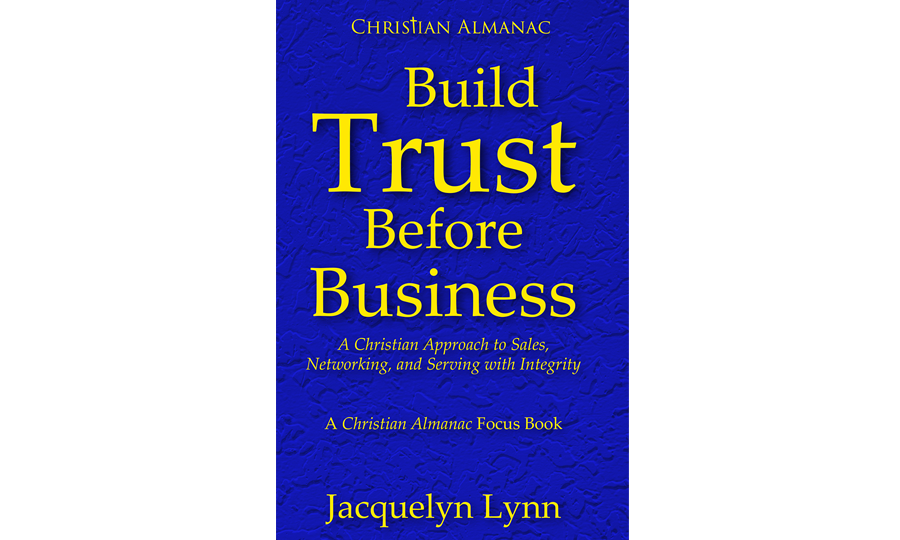
Sales and networking can sometimes make people feel as though they have to choose between growing their business and staying true to their values.
Build Trust Before Business offers another way.
This practical, faith-centered guide helps Christian professionals, business owners, entrepreneurs, salespeople, and ministry leaders approach sales and networking with honesty, wisdom, service, and respect.
Readers will learn how to explain what they offer clearly, listen before presenting, discuss price without pressure, respond to objections honestly, follow up respectfully, and build relationships that are generous rather than transactional.
Build Trust Before Business—a Christian Almanac Focus Book.
Have you ever had a conversation with someone, reached an agreement, thought everything was clear and understood, and then down the road, something happened and you realized that what you each thought you’d agreed to wasn’t the same thing?
It’s happened to all of us. And that’s why this week’s real life tip is: If it’s important, put it in writing. And make it complete.
I’m not talking only about business contracts. I’m talking about anything that’s important and is at risk of being misunderstood.
Putting something in writing doesn’t mean you don’t trust the other person. It means you want to be clear and give everyone a chance to correct any misunderstandings before they turn into problems.
With today’s technology, that’s so easy to do. If it’s a business thing, or even a personal thing that involves money or property, send a quick email that says, “This will confirm our conversation regarding this matter. Here is my understanding of our agreement. If this is accurate, please let me know and we will move forward. If not, let’s clarify.”
Be specific. Include the names of the people involved, the dates, the amounts, the responsibilities, and any deadlines. Don’t assume the other person will remember the details the same way you do.
If it’s personal and not very complex, send a text. Even if you’re just meeting for lunch, get the day, time, and place in writing.
When you do that, it’s a chance for the other person to either confirm the details or to say, “Wait, that’s not what I understood.”
And then clarify things and get something written that you both agree with.
Save the message or email somewhere you can find it later. Putting something in writing won’t help much if you can’t locate it when you need it.
It’s a small thing that can make a big difference when there’s a risk of what’s been called a failure to communicate.
A few written details today can prevent a much bigger misunderstanding tomorrow.
Thanks for being here. See you next week.